
Home > Contact Us > News
Global sourcing strategies have fundamentally transformed how businesses approach textile procurement, with buyers increasingly prioritizing partnerships that offer comprehensive customization capabilities. Modern procurement professionals understand that working with a towel factory that supports custom designs delivers competitive advantages beyond traditional bulk purchasing arrangements. The textile manufacturing landscape has evolved significantly, creating opportunities for strategic partnerships that align with brand differentiation requirements and market positioning objectives.
Contemporary buyers recognize that establishing relationships with specialized manufacturing partners provides sustainable business growth opportunities. The shift toward customization-focused procurement reflects broader market trends emphasizing brand authenticity, customer experience enhancement, and operational flexibility. International buyers consistently demonstrate preference for manufacturing partnerships that combine production expertise with design innovation capabilities, creating mutual value propositions that extend beyond traditional supplier relationships.
Market differentiation remains a critical success factor for businesses operating in competitive retail environments. A towel factory specializing in custom designs enables brands to develop unique product lines that reflect specific aesthetic preferences, functional requirements, and brand identity elements. This approach eliminates the commodity-based competition that characterizes standard product offerings, allowing businesses to establish distinct market positioning through exclusive designs and specialized features.
Custom manufacturing partnerships facilitate the development of proprietary designs that cannot be replicated by competitors sourcing from conventional suppliers. Businesses working with design-focused manufacturers gain access to specialized design teams, advanced printing technologies, and material innovation capabilities that support product uniqueness. The collaborative design process ensures that final products align with specific brand requirements while maintaining manufacturing efficiency and quality standards.
Professional buyers understand that custom design capabilities extend beyond aesthetic considerations to include functional innovations that address specific market needs. Advanced manufacturing facilities can integrate performance features such as enhanced absorbency, antimicrobial treatments, and specialized fiber compositions that differentiate products in crowded marketplace segments. These technical innovations, combined with unique visual designs, create comprehensive product differentiation strategies.
Market responsiveness has become increasingly important as consumer preferences evolve rapidly and seasonal demand patterns create procurement challenges. Working with a towel factory that supports custom designs provides the flexibility necessary to respond quickly to market opportunities, seasonal trends, and customer feedback. This operational agility enables businesses to maintain competitive positions in dynamic market environments.
Flexible production capabilities allow businesses to adjust product specifications, quantities, and delivery schedules based on real-time market conditions. Custom-focused manufacturers typically maintain shorter production cycles and more adaptable production planning systems compared to large-scale commodity producers. This responsiveness enables businesses to capitalize on emerging trends, respond to competitive pressures, and optimize inventory management strategies.
The ability to modify designs during production runs provides additional operational advantages for businesses managing diverse product portfolios or seasonal collections. Experienced manufacturing partners can accommodate specification changes, color adjustments, and sizing modifications without significant production delays or cost penalties. This flexibility proves particularly valuable for businesses serving multiple market segments or geographic regions with varying preferences.
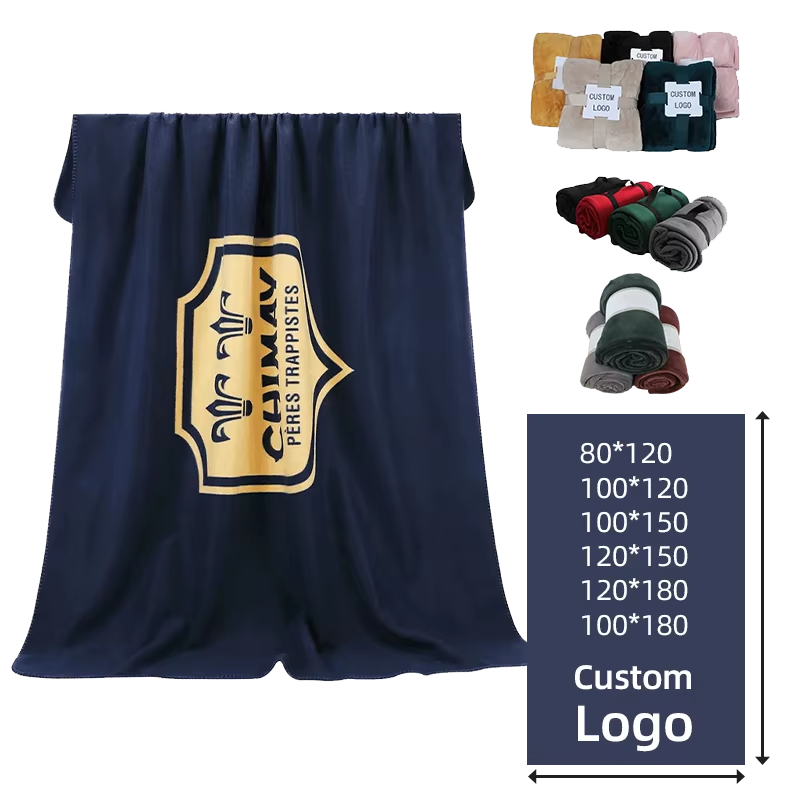
Modern textile manufacturing incorporates sophisticated technologies that ensure consistent quality standards while supporting complex custom design requirements. Professional buyers prioritize partnerships with facilities that maintain advanced production equipment, comprehensive quality control systems, and certified manufacturing processes. These technological capabilities directly impact product quality, production efficiency, and delivery reliability.
Quality assurance protocols in specialized manufacturing facilities typically exceed industry standards, incorporating multiple inspection points, material testing procedures, and finished product evaluations. A reputable towel factory implements systematic quality control measures that verify design accuracy, color consistency, dimensional specifications, and functional performance characteristics. These comprehensive quality systems minimize defect rates and ensure that custom products meet exact specifications.
Investment in advanced production technologies enables manufacturers to achieve precise design reproduction, consistent color matching, and superior finishing quality. Digital printing technologies, computerized cutting systems, and automated quality inspection equipment contribute to manufacturing excellence while supporting complex custom design requirements. These technological capabilities distinguish professional manufacturing partners from commodity-focused suppliers.
Environmental sustainability has become a fundamental consideration for global buyers evaluating manufacturing partnerships. Leading manufacturers implement comprehensive sustainability programs that address environmental impact, resource efficiency, and regulatory compliance requirements. These initiatives align with corporate sustainability objectives while supporting responsible sourcing strategies.
Sustainable manufacturing practices encompass water conservation systems, energy-efficient production processes, waste reduction programs, and environmentally friendly chemical usage. A progressive towel factory typically maintains certifications such as OEKO-TEX, GOTS, or similar environmental standards that verify sustainable manufacturing practices. These certifications provide assurance that custom products meet environmental performance criteria.
Buyers increasingly recognize that sustainable manufacturing partnerships support long-term business objectives while addressing stakeholder expectations regarding environmental responsibility. Collaborative relationships with environmentally conscious manufacturers enable businesses to develop sustainable product lines, achieve corporate sustainability goals, and respond to consumer demand for environmentally responsible products.
Strategic partnerships with design-focused manufacturers create opportunities for value engineering that optimize both product performance and manufacturing costs. Collaborative design processes enable manufacturers to recommend material selections, construction techniques, and design modifications that enhance product value while maintaining cost competitiveness. This approach delivers superior economic outcomes compared to traditional procurement methods.
Experienced manufacturing partners contribute design expertise that identifies cost optimization opportunities without compromising quality standards or design integrity. Professional design teams can suggest alternative materials, simplified construction methods, or production efficiencies that reduce manufacturing costs while preserving product functionality and aesthetic appeal. These collaborative improvements benefit both manufacturing partners and purchasing organizations.
Value engineering extends beyond immediate cost considerations to include long-term economic benefits such as improved product durability, enhanced customer satisfaction, and reduced warranty claims. Working with a towel factory that emphasizes value engineering creates sustainable competitive advantages through superior product performance and optimized total cost of ownership.
Custom design manufacturing does not preclude achieving economies of scale when managed through strategic partnerships with experienced manufacturers. Professional facilities can optimize production scheduling, material utilization, and manufacturing processes to deliver cost-effective custom products at various volume levels. This capability enables businesses to access custom design benefits without sacrificing economic efficiency.
Efficient production planning allows manufacturers to group similar custom orders, optimize material purchasing, and minimize setup costs across multiple custom design projects. Advanced production management systems enable manufacturers to achieve cost efficiencies while maintaining the flexibility necessary to support diverse custom design requirements. These operational efficiencies translate into competitive pricing for custom products.
Long-term partnerships with capable manufacturers create opportunities for volume commitments that support preferential pricing, priority production scheduling, and enhanced service levels. Strategic relationships enable businesses to secure favorable terms while maintaining access to custom design capabilities that support product differentiation and market positioning objectives.
Professional manufacturing partners contribute technical expertise that enhances product development capabilities and accelerates innovation cycles. Experienced design teams understand material properties, manufacturing constraints, and market trends that influence successful product development. This expertise proves invaluable for businesses seeking to develop innovative products that meet specific market requirements.
Advanced towel factory operations maintain dedicated design departments staffed with professionals who understand both aesthetic design principles and manufacturing realities. These teams can translate conceptual ideas into manufacturable designs while recommending improvements that enhance product performance, manufacturing efficiency, and market appeal. Collaborative design development processes ensure that innovative concepts can be successfully produced at commercial scale.
Innovation capabilities extend to material science, printing technologies, finishing techniques, and functional enhancements that differentiate products in competitive markets. Manufacturing partners with strong research and development capabilities can introduce buyers to emerging technologies, new material options, and innovative production techniques that create competitive advantages.
Experienced manufacturers serve multiple international clients and develop comprehensive understanding of global market trends, consumer preferences, and regulatory requirements. This market intelligence provides valuable guidance for product development decisions and helps businesses identify opportunities for innovation and differentiation. Access to market insights enhances strategic planning and product portfolio development.
Professional manufacturing partners can provide guidance on color trends, design preferences, functional requirements, and market positioning strategies based on experience serving diverse international markets. This market intelligence helps businesses make informed decisions about product specifications, design directions, and feature priorities that align with target market preferences.
Collaborative relationships enable manufacturers to share market feedback, performance data, and customer insights that inform continuous product improvement initiatives. This information exchange creates mutual value by helping manufacturers improve their capabilities while providing buyers with actionable intelligence for product development and marketing strategies.
Professional towel factory operations provide integrated supply chain solutions that simplify procurement processes and improve operational efficiency. Comprehensive service offerings typically include design development, material sourcing, production management, quality control, and logistics coordination. These integrated capabilities reduce buyer complexity while ensuring consistent service delivery across all project phases.
Integrated supply chain management enables manufacturers to optimize material sourcing, production scheduling, and inventory management in ways that benefit both manufacturing partners and purchasing organizations. Professional facilities maintain relationships with specialized suppliers, logistics providers, and service partners that support comprehensive project management and delivery excellence.
Advanced supply chain capabilities include vendor management, compliance monitoring, inventory optimization, and delivery coordination that ensure reliable project execution. These operational strengths provide buyers with confidence in project outcomes while minimizing internal resource requirements for supply chain management activities.
International trade regulations, quality standards, and compliance requirements create complex challenges for global procurement operations. Experienced manufacturing partners maintain expertise in regulatory compliance, documentation requirements, and quality certifications that facilitate international trade and minimize compliance risks for purchasing organizations.
Professional manufacturers understand export regulations, product safety standards, labeling requirements, and documentation procedures that vary across different international markets. This regulatory expertise ensures that custom products meet applicable standards and can be successfully imported into target markets without delays or complications.
Compliance management capabilities include maintaining required certifications, implementing traceability systems, and providing documentation that supports regulatory compliance in destination markets. These services reduce buyer risk while ensuring that custom products meet all applicable legal and regulatory requirements.
Custom design capabilities enable international buyers to develop unique product lines that differentiate their brands from competitors. These capabilities support market positioning strategies, enhance customer satisfaction, and create opportunities for premium pricing. Working with a towel factory that specializes in custom designs provides access to professional design expertise, advanced manufacturing technologies, and flexible production solutions that respond to specific market requirements.
Professional custom manufacturing facilities implement comprehensive quality control systems that include multiple inspection points, material testing procedures, and finished product evaluations. These systems verify design accuracy, color consistency, dimensional specifications, and functional performance characteristics. Advanced quality assurance protocols minimize defect rates and ensure that custom products meet exact buyer specifications while maintaining consistent quality standards across production runs.
Design-focused manufacturing partnerships create opportunities for value engineering that optimize product performance while controlling costs. Collaborative design processes identify cost optimization opportunities, material efficiency improvements, and production enhancements that deliver superior economic outcomes. Long-term partnerships enable volume commitments that support preferential pricing and enhanced service levels while maintaining access to custom design capabilities.
Experienced towel factory operations contribute technical expertise, market intelligence, and innovation capabilities that enhance product development outcomes. Professional design teams understand material properties, manufacturing constraints, and market trends that influence successful product development. These manufacturers provide guidance on emerging technologies, new material options, and innovative production techniques that create competitive advantages for their partners.
 Hot News
2024-03-08
2024-03-08
2024-03-08
2024-03-08
2024-03-08
 EN
EN
 AR
AR
 NL
NL
 FR
FR
 DE
DE
 IT
IT
 JA
JA
 KO
KO
 PT
PT
 RU
RU
 ES
ES