Home > Contact Us > News
Hair care enthusiasts and professionals alike have long recognized that the moments immediately following hair washing represent a critical period for hair health. During this vulnerable state, wet hair becomes significantly more prone to damage, breakage, and structural compromise. Traditional cotton towels, while absorbent, often create friction and stress that can lead to cuticle damage and unwanted hair loss. Understanding how specialized hair towels can revolutionize your hair care routine offers valuable insights into maintaining stronger, healthier locks while reducing the daily wear and tear that accumulates over time.
When hair becomes saturated with water, its internal structure undergoes significant changes that dramatically increase susceptibility to damage. The hair shaft swells as water molecules penetrate the cuticle layers, temporarily weakening the protein bonds that provide structural integrity. This swelling effect can increase hair diameter by up to twenty-five percent, creating tension within the follicle and making individual strands more prone to snapping under mechanical stress. Research conducted by leading trichologists demonstrates that wet hair requires only half the force needed to cause breakage compared to dry hair, highlighting the importance of gentle handling during the drying process.
The cuticle structure, which consists of overlapping scales that protect the inner cortex, becomes elevated and more fragile when exposed to moisture. These raised cuticles create friction points that can catch and tear when subjected to rough handling or abrasive materials. Traditional drying methods often exacerbate this vulnerability by creating additional mechanical stress through vigorous rubbing motions and harsh fabric textures that can lift and damage these delicate protective layers.
Conventional cotton towels, despite their widespread use, present several challenges for optimal hair care due to their fiber structure and absorption mechanisms. Cotton fibers feature a looped terry construction that, while effective for water absorption on skin, can create snag points and friction when used on delicate wet hair strands. The relatively coarse texture of cotton can cause microscopic tears in the cuticle layer, leading to increased porosity, reduced shine, and greater susceptibility to environmental damage over time.
Furthermore, the absorption method employed by cotton towels relies primarily on mechanical action and fiber volume rather than advanced wicking technology. This approach often requires more aggressive rubbing and manipulation to achieve adequate moisture removal, inadvertently creating additional stress on already vulnerable hair structures. The weight and bulk of saturated cotton towels can also create pulling forces that stress the hair root and contribute to mechanical breakage at the scalp level.
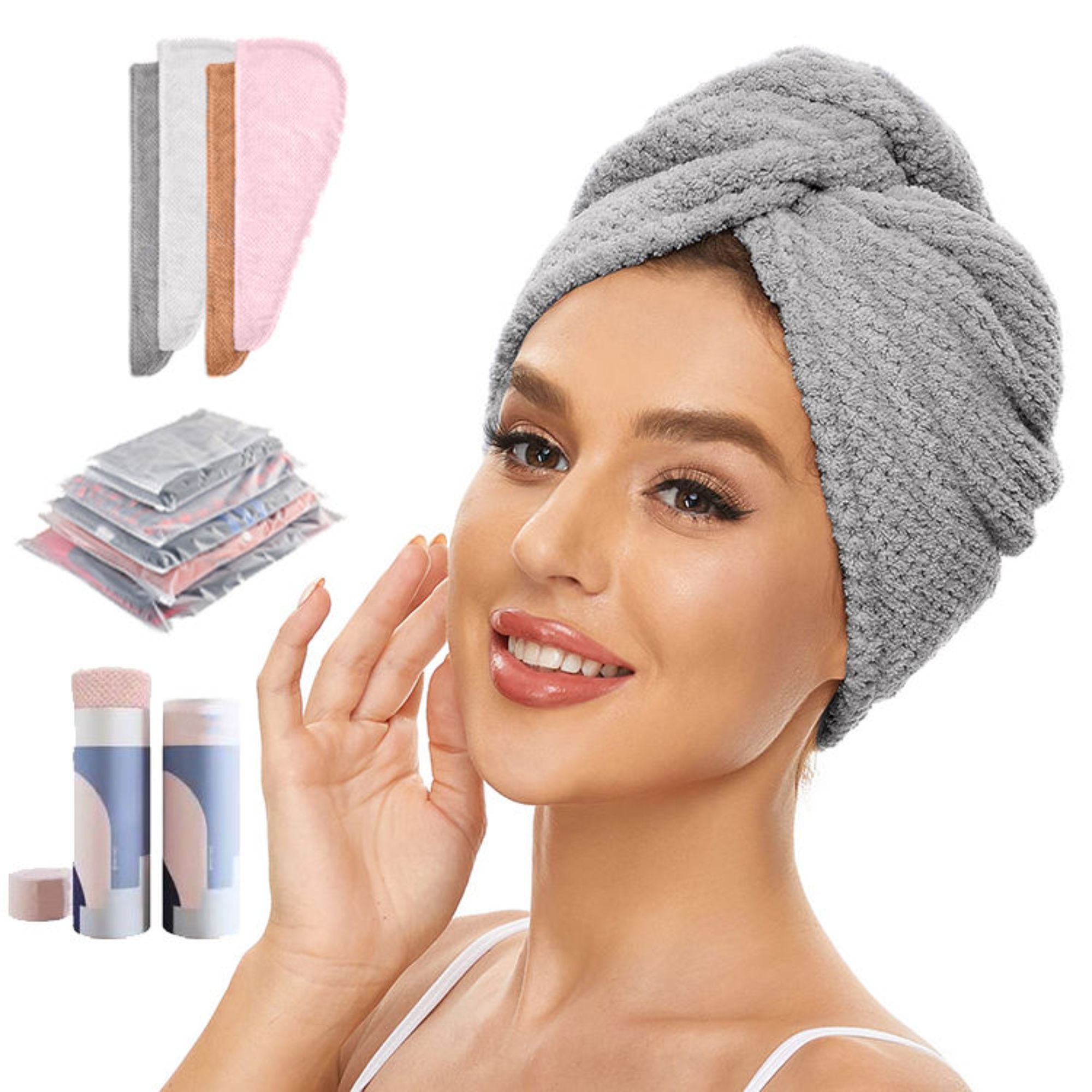
Modern hair towels utilize sophisticated microfiber technology that fundamentally changes the drying experience through advanced material science. Microfiber strands measure less than one denier in thickness, making them significantly finer than human hair and capable of creating an ultra-smooth surface that minimizes friction during the drying process. These microscopic fibers are engineered with a unique cross-sectional design that creates capillary channels, allowing for rapid moisture absorption without requiring aggressive mechanical action or prolonged contact time.
The absorption capacity of quality microfiber exceeds that of cotton by several magnitudes, with some advanced formulations capable of absorbing up to seven times their weight in water. This enhanced absorption efficiency translates directly into reduced drying time and decreased manipulation required to achieve optimal moisture removal. The smooth fiber surface glides across wet hair without catching or snagging, preserving cuticle integrity while effectively drawing moisture away from the hair shaft through advanced wicking mechanisms.
Professional-grade hair towels incorporate specialized weaving patterns specifically designed to optimize hair care outcomes while minimizing potential damage. These patterns often feature a waffle or honeycomb construction that creates increased surface area for moisture contact while maintaining a smooth, non-abrasive texture against the hair surface. The three-dimensional structure of these weaves allows for enhanced air circulation and faster evaporation rates, reducing the overall time required for complete moisture removal.
Advanced manufacturing techniques also enable the creation of split-fiber technology, where individual microfiber strands are mechanically split to create even finer filaments with enhanced absorption properties. This splitting process increases the effective surface area of each fiber exponentially, creating a velvet-like texture that provides gentle contact while maximizing moisture-wicking efficiency. The result is a drying experience that feels luxurious while delivering superior hair protection through reduced friction and enhanced absorption capabilities.
The implementation of specialized hair towels in daily hair care routines demonstrates measurable improvements in hair health metrics, particularly regarding mechanical breakage reduction. Clinical studies tracking hair loss during drying processes show significant decreases in broken strands when microfiber technology replaces traditional cotton towels. The smooth fiber surface eliminates the catching and pulling motions that commonly occur with conventional materials, preserving hair length and density over extended periods of consistent use.
The gentle absorption process facilitated by advanced hair towels also reduces the need for heat styling tools, which contribute significantly to cumulative hair damage through protein denaturation and moisture loss. By achieving faster natural drying times and reducing residual moisture content, these towels minimize the reliance on blow dryers and other thermal styling implements that can compromise hair structure through excessive heat exposure and forced air circulation.
Proper cuticle preservation represents one of the most significant benefits provided by quality hair towels, as intact cuticle layers directly correlate with hair shine, smoothness, and overall aesthetic appeal. The gentle drying action preserves the natural layering of cuticle scales, maintaining their optimal alignment and preventing the lifting and roughening that occurs with harsh drying methods. This preservation translates into improved light reflection properties, creating natural shine and luster that requires minimal additional styling products or treatments.
Hair towels also contribute to improved manageability by reducing static electricity buildup that commonly occurs during the drying process. The smooth microfiber surface and efficient moisture removal minimize the electrical charge differential that creates flyaway hair and styling difficulties. This enhanced manageability extends beyond the immediate post-washing period, as preserved cuticle integrity maintains hair's natural protective barriers and reduces susceptibility to environmental humidity and atmospheric moisture fluctuations.
Professional hair care establishments have increasingly adopted specialized hair towels as standard equipment due to their superior performance characteristics and client satisfaction outcomes. Salon professionals report significant improvements in service efficiency, as faster drying times enable more appointments per day while maintaining high-quality results. The consistent performance of microfiber hair towels also reduces variability in styling outcomes, allowing stylists to achieve more predictable results across diverse hair types and textures.
The durability and washability of quality hair towels make them economically attractive for commercial applications, as they maintain their performance characteristics through hundreds of wash cycles without degradation. Professional-grade materials resist bacterial growth and odor retention, essential factors in maintaining sanitary conditions in high-volume service environments. Many establishments report reduced product waste and improved client retention rates following the implementation of advanced hair towel technology in their service protocols.
The adoption of specialized hair towels necessitates updated training protocols for hair care professionals, as optimal results require specific handling techniques that differ from traditional towel applications. Professional education programs now incorporate modules on advanced drying technology, teaching stylists to utilize the enhanced absorption properties while minimizing mechanical manipulation. These techniques emphasize gentle pressing and wrapping motions rather than rubbing or scrubbing actions that can compromise hair integrity.
Continuing education in hair towel technology also addresses proper maintenance and care procedures to ensure consistent performance over the product lifecycle. Professional users learn to recognize signs of fiber degradation and understand replacement schedules that maintain optimal service quality. This technical knowledge enables salon professionals to educate clients about home care practices, creating opportunities for retail sales and improved client outcomes through consistent technique application.
Selecting optimal hair towels requires understanding key material characteristics that directly impact performance and longevity. Fiber density represents a critical factor, as higher-quality products typically feature tighter weaves with increased fiber count per square inch. This density correlation directly affects absorption capacity, durability, and overall effectiveness in moisture removal while maintaining gentle contact with hair surfaces.
The denier measurement of constituent fibers provides another important selection criterion, with finer filaments generally offering superior hair care properties. Quality hair towels typically utilize fibers measuring less than 0.5 denier, creating the ultra-smooth texture necessary for damage-free drying. Edge construction and hemming techniques also influence performance, as poorly finished edges can create snag points that compromise the gentle drying experience these products are designed to provide.
Optimal hair towel dimensions vary based on hair length, thickness, and intended application methods, with most professional-grade products offering multiple size options to accommodate diverse user needs. Larger formats provide advantages for long or thick hair types, allowing for complete coverage without excessive manipulation or repositioning during the drying process. Smaller, more compact designs offer benefits for travel applications or specific styling techniques that require precise moisture control in targeted areas.
Design features such as button closures, elastic bands, or wrap configurations can enhance usability and effectiveness by maintaining proper positioning during the drying period. These functional elements should be constructed from materials that complement the primary fabric performance while avoiding metal components that might create snag points or cause hair damage. Color selection, while primarily aesthetic, can also serve practical purposes in professional environments where color coding helps maintain sanitary protocols and inventory management.
Quality hair towels typically maintain their effectiveness for six to twelve months with regular use, depending on care practices and usage frequency. Signs indicating replacement necessity include reduced absorption capacity, fabric roughening, or persistent odor retention despite proper washing. Professional users in high-volume environments may require more frequent replacement due to increased wear and exposure to various hair care products that can affect fiber integrity over time.
Hair towels provide benefits across all hair types and textures, with particularly pronounced advantages for chemically treated, colored, or damaged hair that requires gentle handling. The reduced friction and efficient moisture removal help preserve chemical treatments while minimizing additional stress on already compromised hair structures. However, individuals with extremely fragile or over-processed hair should use extra gentle techniques and may benefit from air-drying methods in combination with hair towel use.
Proper maintenance requires washing hair towels in warm water using mild detergents without fabric softeners, which can coat microfibers and reduce absorption capacity. Machine drying on low heat settings or air drying preserves fiber integrity while preventing shrinkage and maintaining optimal texture. Avoiding bleach, harsh chemicals, and high-temperature washing cycles extends product lifespan while maintaining the gentle properties essential for effective hair care applications.
Optimal hair towel techniques involve gentle pressing and patting motions rather than rubbing or scrubbing actions that can cause cuticle damage. Wrapping hair loosely in the towel and allowing capillary action to draw moisture naturally provides superior results compared to aggressive manipulation. Starting from the scalp and working toward the ends while maintaining gentle pressure helps preserve hair structure while achieving efficient moisture removal through the advanced wicking properties of quality microfiber materials.
 Hot News
2024-03-08
2024-03-08
2024-03-08
2024-03-08
2024-03-08
 EN
EN
 AR
AR
 NL
NL
 FR
FR
 DE
DE
 IT
IT
 JA
JA
 KO
KO
 PT
PT
 RU
RU
 ES
ES