
Home > Contact Us > News
Ordering beach towel collections for wholesale distribution requires strategic planning and informed decision-making. Wholesale buyers must understand the critical factors that determine product quality, customer satisfaction, and ultimately, business profitability. Unlike retail purchases, wholesale beach towel transactions involve larger quantities, longer lead times, and greater financial commitment. Understanding material composition, sizing standards, manufacturing processes, and supplier capabilities transforms the ordering experience from risky to reliable.
Before committing to any beach towel order, wholesale buyers should conduct thorough due diligence on multiple fronts. The beach towel market includes vast quality variations, pricing inconsistencies, and supplier performance differences that directly impact your resale margins and customer retention. This comprehensive guide walks you through the essential knowledge, evaluation criteria, and negotiation strategies that separate successful wholesale buyers from those who face costly mistakes.
The foundation of any quality beach towel lies in its fabric composition and cotton sourcing. Not all cotton delivers equal performance, absorbency, or durability in a beach towel product. Combed cotton represents a premium standard where short fibers are removed during processing, resulting in superior softness and reduced pilling compared to conventional cotton. When evaluating beach towel options, verify whether suppliers use combed or conventional cotton, as this distinction directly influences customer satisfaction and repeat purchases. GSM (grams per square meter) ratings between 400 and 600 indicate appropriate weight for consumer-grade beach towel applications, balancing absorbency with quick-drying capability.
Wholesale beach towel buyers must evaluate durability metrics that determine product lifespan and customer returns. Request information about fabric shrinkage rates, color fastness certifications, and pile retention testing from your beach towel supplier. A quality beach towel should maintain structural integrity through at least thirty washing cycles without significant fading, deterioration, or edge fraying. Inquire about specific finishing techniques your supplier applies to beach towel products, including twisted pile construction that prevents unraveling and reinforced edge binding that extends usable lifespan. These technical specifications separate premium beach towel collections from budget alternatives that generate customer complaints and returns.
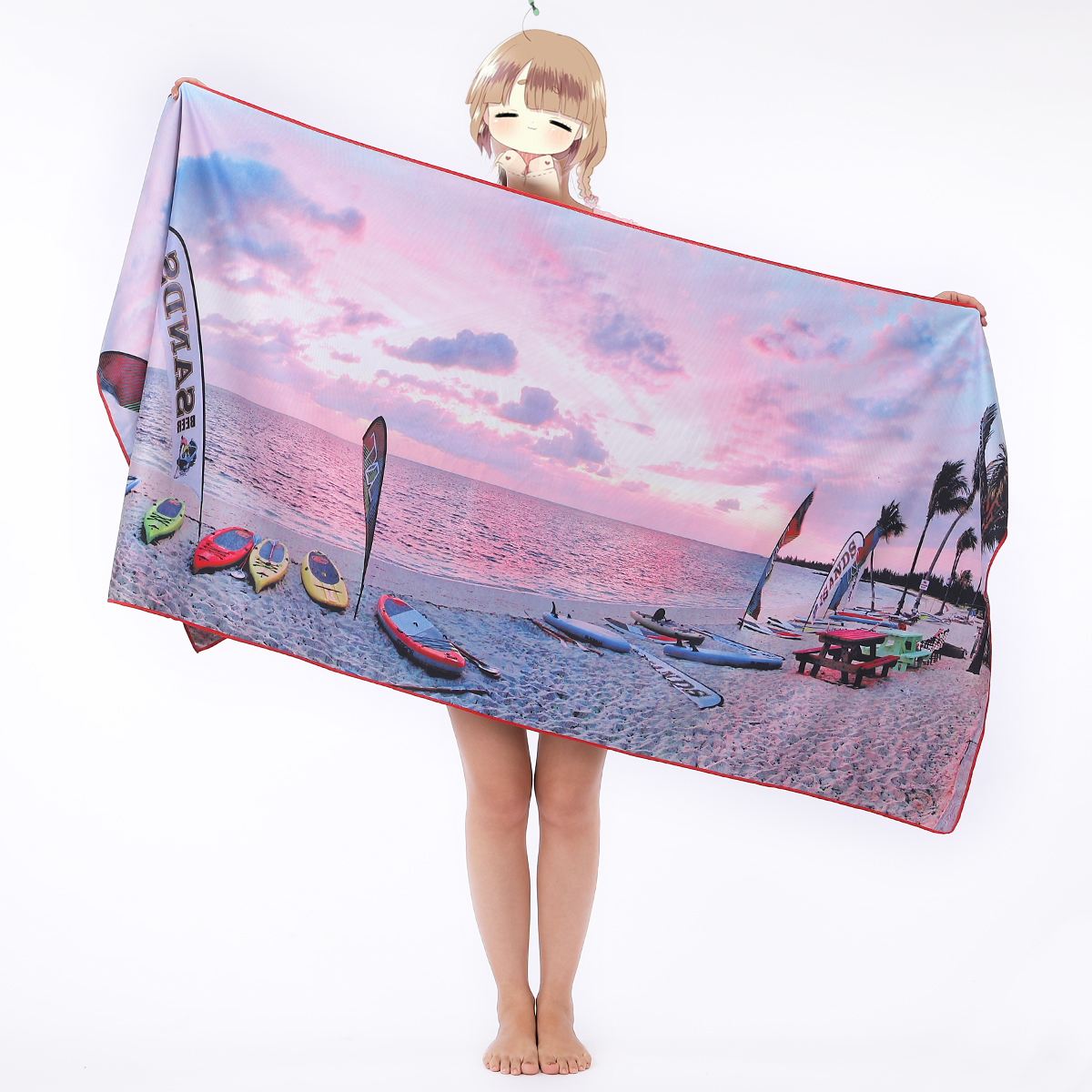
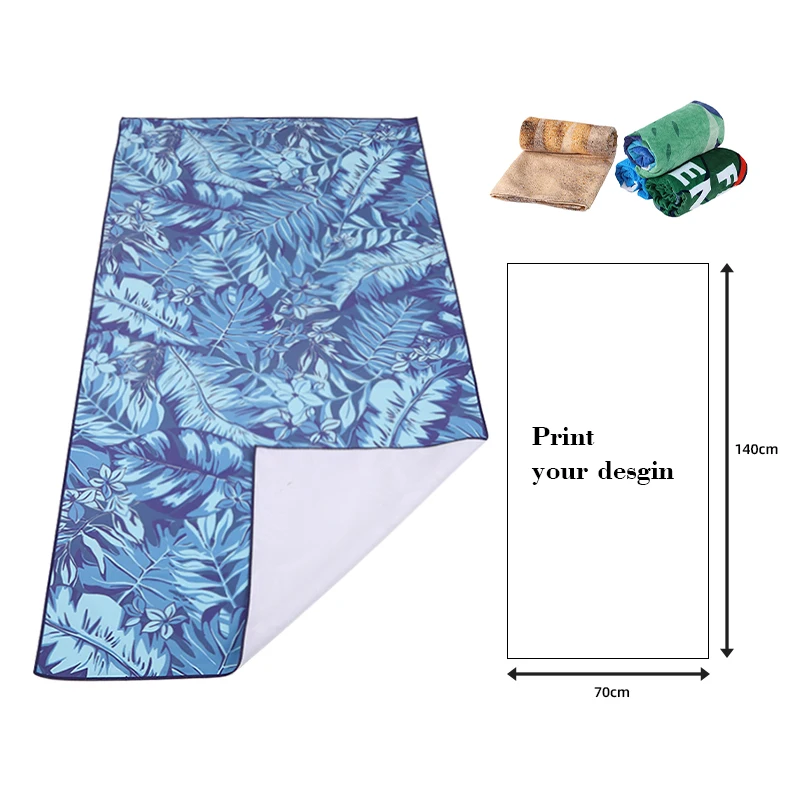
Standard beach towel sizing follows industry conventions, yet manufacturers often introduce variations that impact wholesale distribution. The most common beach towel dimensions measure 30 by 60 inches, though oversized variants reaching 35 by 70 inches command premium pricing in affluent market segments. Before ordering any beach towel collection, confirm exact dimensional specifications, including seam-to-seam measurements and post-wash shrinkage projections. A reliable beach towel supplier should guarantee dimensional tolerances within plus or minus one percent, ensuring consistent shelf display and customer expectations across your entire inventory.
Many wholesale beach towel buyers overlook shrinkage projections, discovering significant dimension problems only after customer complaints emerge. Quality beach towel manufacturers typically pre-shrink fabrics during manufacturing to stabilize dimensions after customer use. Request specific pre-shrinkage data from your beach towel supplier, including projected shrinkage percentages and dimensional stability guarantees. This information ensures your beach towel inventory meets customer expectations and reduces return rates that erode profit margins. Understanding these technical specifications demonstrates professional procurement expertise to your suppliers and establishes authority in price negotiations.
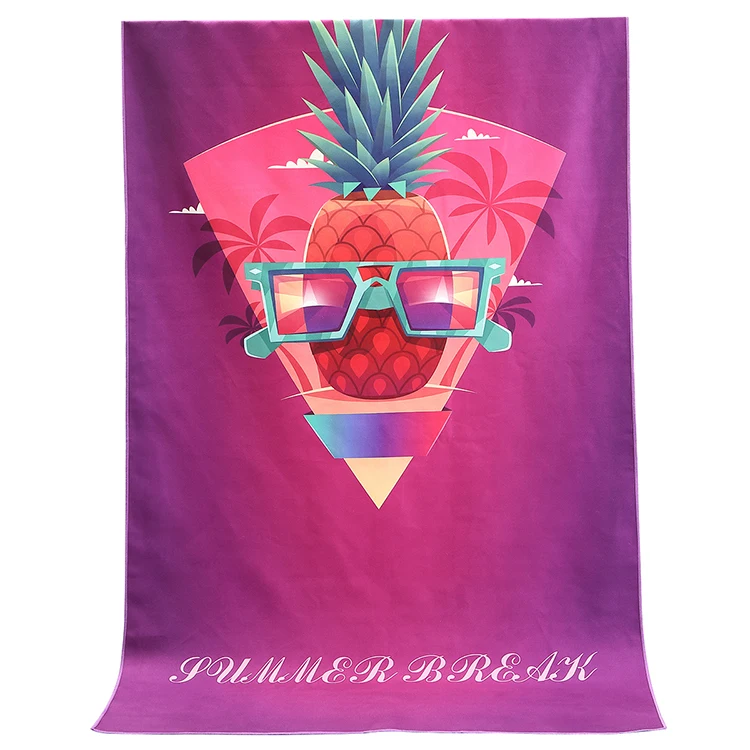
The visual appeal and durability of designs significantly influence beach towel market performance and customer satisfaction levels. Digital printing, screen printing, and jacquard weaving represent the primary techniques for creating designs on beach towel products, each offering distinct advantages and cost profiles. Screen-printed beach towel collections provide bold, vibrant colors with excellent durability but require minimum order quantities that challenge smaller wholesale buyers. Digital printing enables smaller batches and rapid customization on beach towel projects, though color penetration and washability require verification before bulk ordering commitments.
Wholesale beach towel buyers increasingly demand customization options that differentiate their offerings in competitive markets. Evaluate your potential beach towel supplier's design capabilities, including graphic quality, color accuracy, and revision processes before finalizing orders. Request samples featuring your exact design specifications on the beach towel products you intend to order, rather than relying on generic mockups. Verify that beach towel suppliers maintain quality control procedures ensuring consistent branding across entire production batches. This scrutiny prevents embarrassing design discrepancies and protects your brand reputation when distributing beach towel collections to retail partners or direct customers.
Wholesale beach towel pricing follows volume-tiered structures where larger orders generate proportionally lower per-unit costs. Reputable beach towel suppliers typically offer distinct pricing for orders ranging from 100 to 500 units, 500 to 2,000 units, and 2,000+ units, with significant per-unit discounts at each threshold. Before ordering beach towel collections, calculate your projected sales velocity and storage capacity to determine optimal purchase quantities that maximize pricing advantages without overextending inventory investment. Negotiating volume commitments with beach towel suppliers sometimes unlocks additional discounts, payment terms, or customization benefits that improve overall profitability.
Savvy wholesale beach towel buyers calculate total cost of ownership including shipping, tariffs, quality control, and potential returns rather than focusing exclusively on per-unit pricing. Domestic beach towel suppliers typically command premium prices but offer shorter lead times, lower shipping costs, and reduced international logistics complexity. International beach towel sourcing presents cost savings opportunities but introduces currency risks, extended delivery timeframes, and customs clearance challenges. Request transparent beach towel pricing breakdowns from suppliers before committing to orders, ensuring no hidden fees emerge after purchase agreements are finalized.
Request confirmation that your beach towel supplier maintains industry certifications including Oeko-Tex Standard 100 for chemical safety, GOTS (Global Organic Textile Standard) for sustainable production, or ISO quality management certifications. These beach towel certifications demonstrate adherence to rigorous quality standards and provide liability protection for wholesale buyers. Additionally, confirm compliance with regulatory requirements specific to your distribution markets, ensuring your beach towel inventory meets all applicable safety and labeling standards.
Request comprehensive beach towel samples featuring your exact specifications, then conduct rigorous testing including machine washing, color fastness evaluation, and dimensional measurement. Wash each beach towel sample multiple times using your target customer's typical laundering methods, observing how fabric behaves through complete lifecycles. Compare beach towel samples from multiple suppliers side-by-side, evaluating softness, absorbency, weight distribution, and design clarity before making final supplier selections.
Domestic beach towel suppliers typically deliver within two to three weeks after order confirmation, while international beach towel manufacturers often require four to eight weeks plus additional customs clearance time. Factor seasonal demand variations into your beach towel procurement planning, as summer months create extended lead times due to peak ordering volume. Discuss production schedules and rush order options with your beach towel supplier to establish realistic timelines that align with your distribution and retail partner requirements.
 Hot News
2024-03-08
2024-03-08
2024-03-08
2024-03-08
2024-03-08
 EN
EN
 AR
AR
 NL
NL
 FR
FR
 DE
DE
 IT
IT
 JA
JA
 KO
KO
 PT
PT
 RU
RU
 ES
ES